
- Is there a fixed timetable for each race in the F1 Grand Prix?
Yes, with the exception of the official race, which usually starts at 2:00 p.m. local time, the timetable for each part of the race is as follows: Friday 11:00 a.m. to 12:00 p.m., free practice; 1:00 p.m. to 2:00 p.m., first stage of qualifying; Saturday 9:00 a.m. to 9:45 a.m. and 10:15 a.m. to 11:00 a.m., free practice prior to qualifying; 1:00 p.m. to 2:00 p.m., second stage of qualifying; Sunday At There will be a half-hour warm-up session four and a half hours before the start of the official race. Note: Monaco is a special event and free practice is scheduled for Thursday.
- Can any circuit host an F1 race?
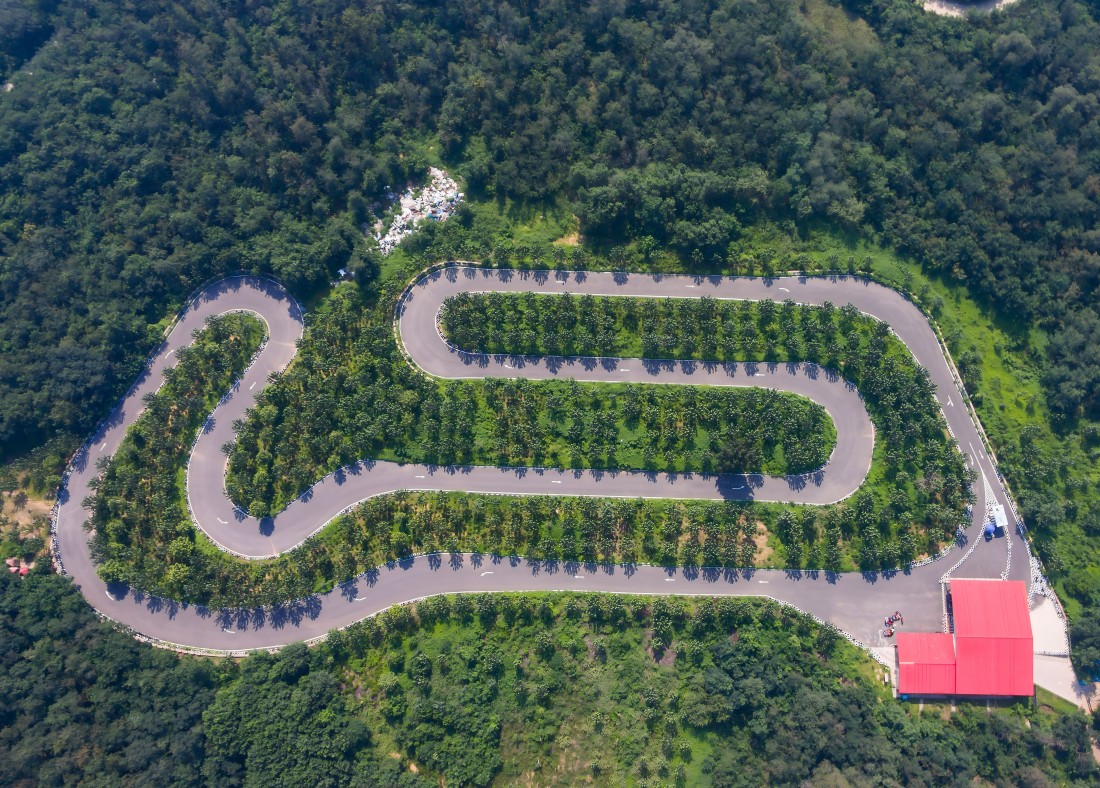
No. In the early days of Formula One, a Grand Prix could be held at any circuit, but the increase in racing performance has prompted the FIA to impose strict requirements on circuit layout, length, width, surface, safety measures and equipment. Nowadays, only FIA-approved Class 1 circuits are eligible to host F1 divisional races.
- What kind of circuits are recognized by the FIA as Class 1 circuits?
Circuits are subject to inspection by the FIA, including track maintenance and equipment renewal. Traditionally, track design has favored high-speed straights, but the increased performance of modern racing cars has led to a shift in design toward continuous curves. Long circuits such as Nurburgring have been abandoned due to high costs. Currently, Monaco is the shortest circuit in F1, while Spa in Belgium is the longest.
- What is the concept of a team in F1?
F1 teams are usually named after the bodybuilder, which may be different from the engine manufacturer. Teams are named with the bodybuilder's name first and the engine manufacturer second, e.g. Williams-BMW. The Team World Championship is awarded to the bodywork manufacturer only.
- What criteria does a team need to meet in order to compete in Formula One?
In order to compete in Formula One, a team must apply to the FIA and demonstrate the ability to design and build Formula One cars, as well as having sufficient technical and financial resources. Currently, F1 racing is limited to 12 teams, each with two drivers per race.
- Must each team compete in all races throughout the year?
Yes. If a team is unable to participate in a particular race, it can be fined hundreds of thousands of dollars. No new teams are allowed to join the race after the start of the season.
- Can any driver compete in an F1 Grand Prix?
No. In order to participate in an F1 Grand Prix, a driver must have a 'Super License', which is issued based on the driver's results in lower level formula races, and the driver must also be associated with a team that competes in F1. The driver must also have a valid contract with a team competing in the Formula One Grand Prix.
- Can a team change drivers during the season?
During the season, a team can change its number one driver once, and its number two driver can rotate up to three times, without any strict limitations. There is no strict limit. Special cases can be handled on an individual basis. Teams must notify the Race Committee by 4pm on Thursday (Wednesday for Monaco) before the race, otherwise the Race Committee's approval is required.
- Is the driver's number always the same during a season?
Driver numbers are fixed unless a team changes during the season. The number is determined by the team's results. The champion driver's new season number is 1 and his teammate's number is 2.
- Is there no limit to the number of laps a driver can do during free practice?
In qualifying free practice, drivers are limited to 12 laps. Exceeding the limit will cancel the qualifying result and start last in the official race.
- How does qualifying work?
Qualifying is scheduled for Friday and Saturday afternoons from 1-2 p.m. Prior to the 2003 season, drivers were required to complete a lap within 107% of the fastest driver's time in order to qualify for the race, otherwise they could not take part in the official race, a rule that has been abolished by the FIA with a major revision of the qualifying rules from 2003 onwards.
- How are the heat races conducted?
Warm-ups are the last practice session before the official race and usually take place on the morning of the race, lasting half an hour. Only drivers who have qualified for the race can participate. This session allows teams to make final test runs and adjustments in order to identify and resolve potential problems.
- Can a driver change cars while the race is in progress?
Teams can use a maximum of 2 cars in free practice and 3 cars in pre-qualifying practice, all cars need to pass the pre-race inspection. Drivers are not allowed to change their cars after the start of the race, unless the race is stopped and restarted within 2 laps due to a serious accident, etc.
- What is the arrangement of drivers at the start of the race?
Drivers are lined up in staggered rows, 8 meters apart. The fastest qualifier will be awarded the pole position, i.e. 1st position, and the rest of the drivers will be ranked according to their results.The rest of the drivers are ranked according to their times. If the times are the same, the one who arrives first will be in front.
- Can a team design a special car for qualifying?
The qualifying car must be the same as the official race car, but the team can make different settings for the tuning and engine of the car.
- Some of the rules of F1 have been changed:
2007 F1 new rules include doubling the number of tires, eliminating the third car, adjusting safety car rules, limiting gearbox replacement, practice sessions limited to two cars for 90 minutes, Bridgestone is the only tire supplier, each driver can use 14 sets of dry tires for each stop, engine rules adjusted, overtaking and pit stops are prohibited when the safety car is out of the way, and the lapped car must be more than the normal lapped car, and the race committee can penalize the retired starting position.
2008 rules simplified to standardize electronic control units, traction control system eliminated, overtaking opportunities increased, engine rules allow replacement for failure without penalty, qualifying times adjusted, teams limited to two cars per grand prix, spare cars eliminated, technical regulations limit car sizes to ensure similarity of dimensions, only four wheels permitted on cars, chassis to include safety unit and rolling stock, no changes to electronic and computer systems allowed at the start of the season. Electronic and computer systems may not be altered and a specific remote sensing incident data reporting system must be used.
Rules changes for 2016 include technical enhancements to the sound and spectacle of the cars, turbo exhausts and pressure reducing valve outlets must be separated, engine suppliers are permitted mid-season research and development, the qualifying rule was adjusted to a “90-second battle royale” which was scrapped after only two races due to the frequency of accidents, new very soft tires were introduced, drivers have seven tire choices, and three dry tires are officially designated. A new extremely soft tire was introduced, giving drivers seven tire choices, and three dry tire compounds were officially designated, with 13 sets of dry tires available to each driver for each race, and two different tires must be changed for the main race.
The new rules for the 2022 season are designed to improve the chances of entanglement and overtaking in the race and enhance spectacle, technically the ground effect returns to F1, in terms of tires, Pirelli will offer 18-inch tires to reduce overheating, and drivers will have the freedom to choose their starting tires in qualifying.